Research
The Spohad lab is currently active in three broad research areas.
Future Thinking
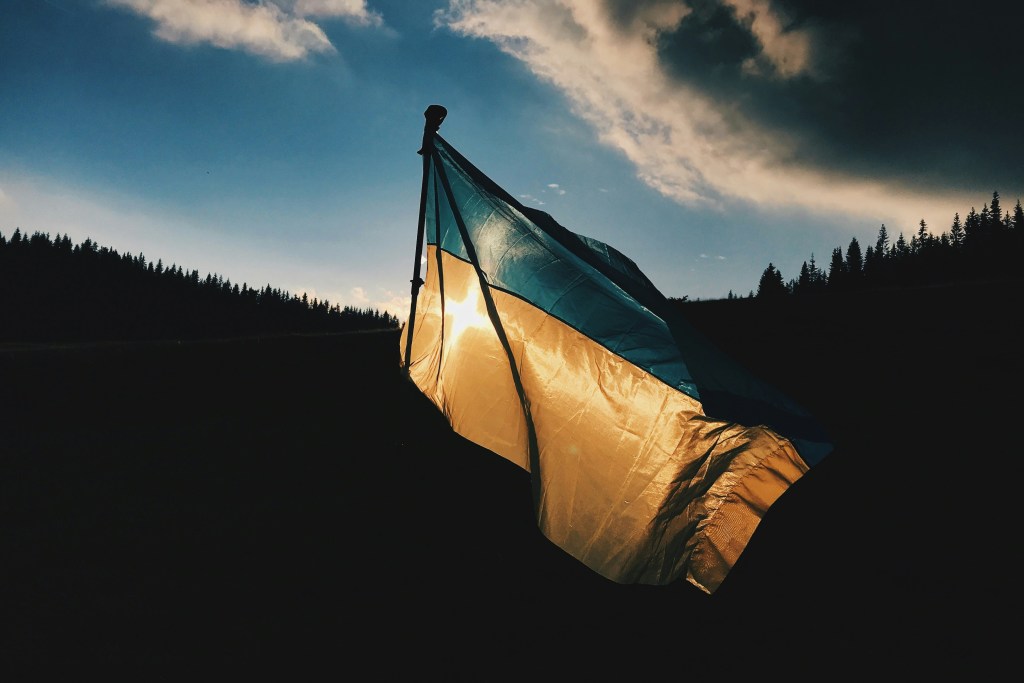
How do you imagine your personal and your country’s future?
And would that change if your country was currently fighting against an invasion?
Previous research has shown that we use specific memories, abstract scripts, and current goals to imagine the future. It has also shown that we tend to think that our own future will be highly positive, while our country’s future seems rather negative.
We investigate how this process is impacted by war by asking Ukrainians to imagine their personal and collective future.
A surprising finding: The wartime positivity effect
In our first study, we found a surprising pattern:
- Ukrainians are more positive about their collective future than German and Polish control samples.
- Ukrainians feel more agency in shaping their country’s future than German and Polish controls.
- Personal and collective futures are highly intermixed in Ukraine: The country plays an important role even in the personal future.
- The more a participant is impacted by war, the more positively they imagine the future.
These findings go against many more established studies and will therefore be explored in a follow-up experiment: What functions does this wartime positivity serve, and what are possible boundary conditions?
Publication
We published a first preprint with our results, and are currently preparing a follow-up study. For that project, two of our members, Karine Malysheva and Marius Boeltzig, won a Collaborative Grant from the Society of Applied Research in Memory and Cognition (2,000 USD).
Traumatic Memories
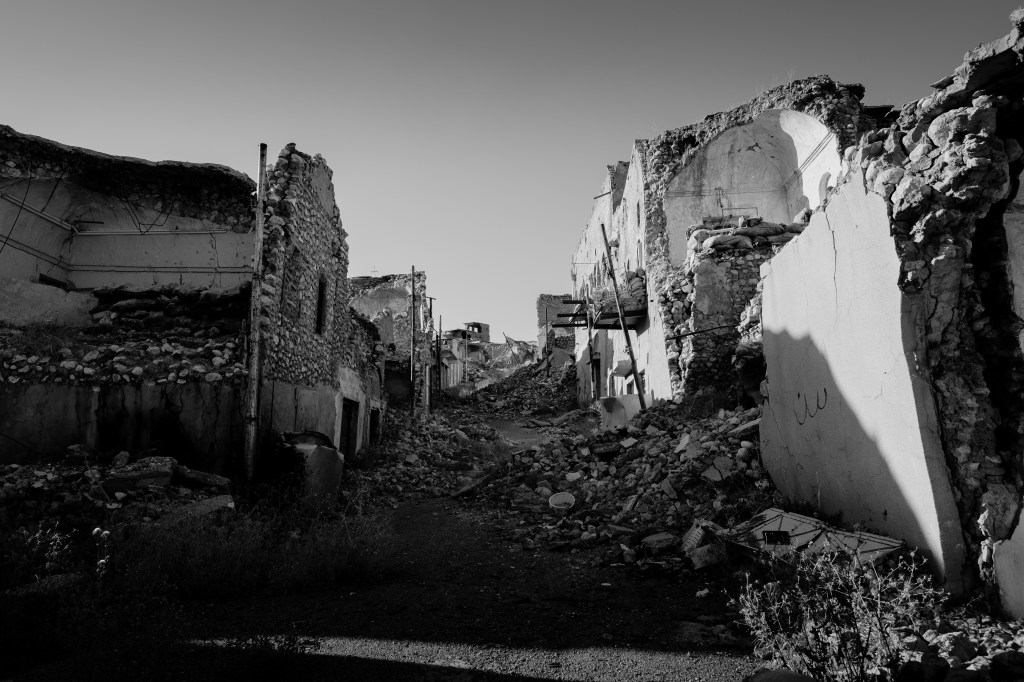
War is one of the most stressful experiences that humans can be exposed to. While a lot of research has addressed how soldiers and military personell are impacted by traumatic experiences and how memories of these events impact mental health, less is known about civilian populations living through an invasion with an ongoing threat to mental and physical wellbeing.
We are interested in the circumstances under which Ukrainians form traumatic memories and which experiences are most likely to trigger them. We also investigate when these memories may lead to psychological diseases such as post-traumatic stress disorder and which factors can protect against their effects.
Trauma Fragments
There is a lively debate whether traumatic memories are fragmented and incoherent, and whether fragmentation is associated with post traumatic stress disorder symptoms. We addressed this question in Ukraine and found that when participants experience their memories as more incoherent, they also report more post traumatic stress symptoms. We are currently preparing a publication on this data.
Collective Memories
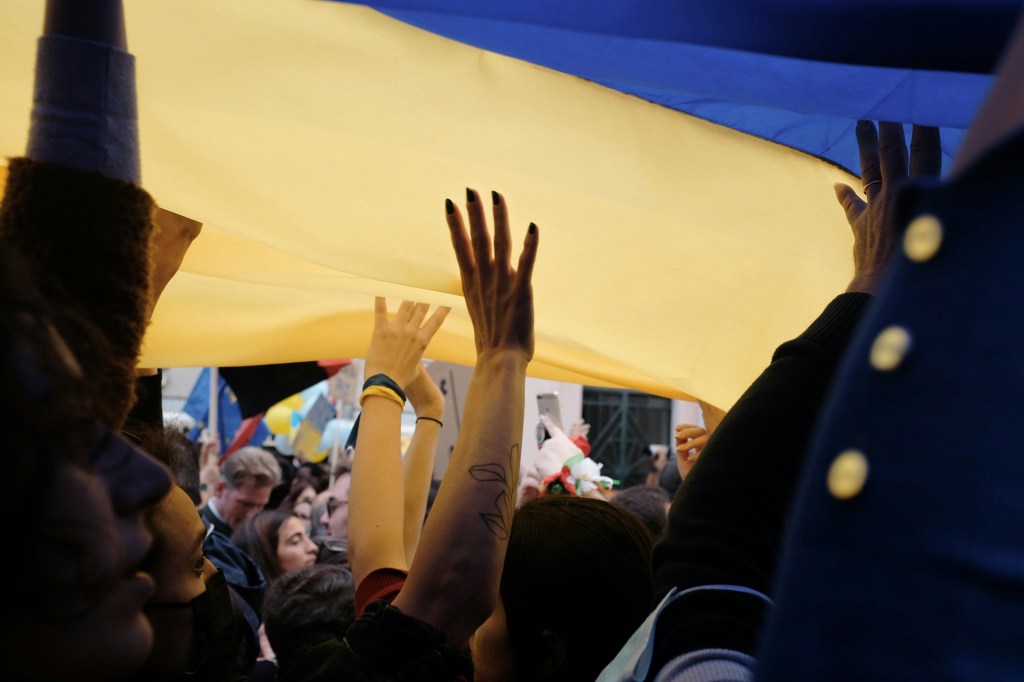
Nations are based on memories. They are influenced by collectively experienced events, or by a history that shapes what it means to be a nation’s citizen. Leaders use collective memories to rally support, students are taught a canonical narrative of the nation’s past in school, and historical events are used to understand current and future ones.
Wars catalyse these processes. We are therefore interested in the role of collective memory in Ukraine during the invasion and how individual citizens experience collectively shared events.
When history bursts into everyday life: Flashbulb Memories
Flashbulb Memories are memories of how one first heard of significant public events. They are highly vivid, confidently held, and often shared with others – possibly reflecting that they are a piece of world literature in our very own private life.
We are interested in how these memories are formed, depending on whether one is directly affected by the event or not. We therefore compared samples in Ukraine with samples in Poland and Germany on their memory of the beginning of the russian full-scale invasion of Ukraine.
We specifically focus on identities: In Ukraine, do people who identify more strongly with their country form stronger Flashbulb Memories? In Germany and Poland, do people who identify more strongly with relevant supra-national groups, such as Central Europe or the Democratic world from stronger Flashbulb Memories?
We also test factors such as event impact, surprise, and warmth towards the affected group. Additionally, we explore whether factors of the situation itself (e.g., whether one got the news from a person or via the media) impact Flashbulb Memories.
Results will be shared in a paper soon.

